'/%3E%3C/g%3E%3Cuse%20x='525'%20href='%23b'/%3E%3C/g%3E%3Cuse%20y='375'%20href='%23c'/%3E%3C/svg%3E)
Hands-on equine first aid training at your barn, so your community knows what to do when a horse needs help
For horse owners, barns, coaches, clubs, and associations.
Les formations sont aussi offertes en français.
Emergencies are never convenient. They do not wait until the vet is standing beside you, until the weather is good, or until everyone feels ready.
But with the right training, your barn community can be better prepared. You can notice sooner, respond more calmly, and support the horse more safely until professional help arrives.
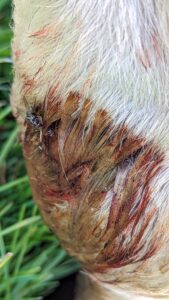
Would you know what to do immediately?
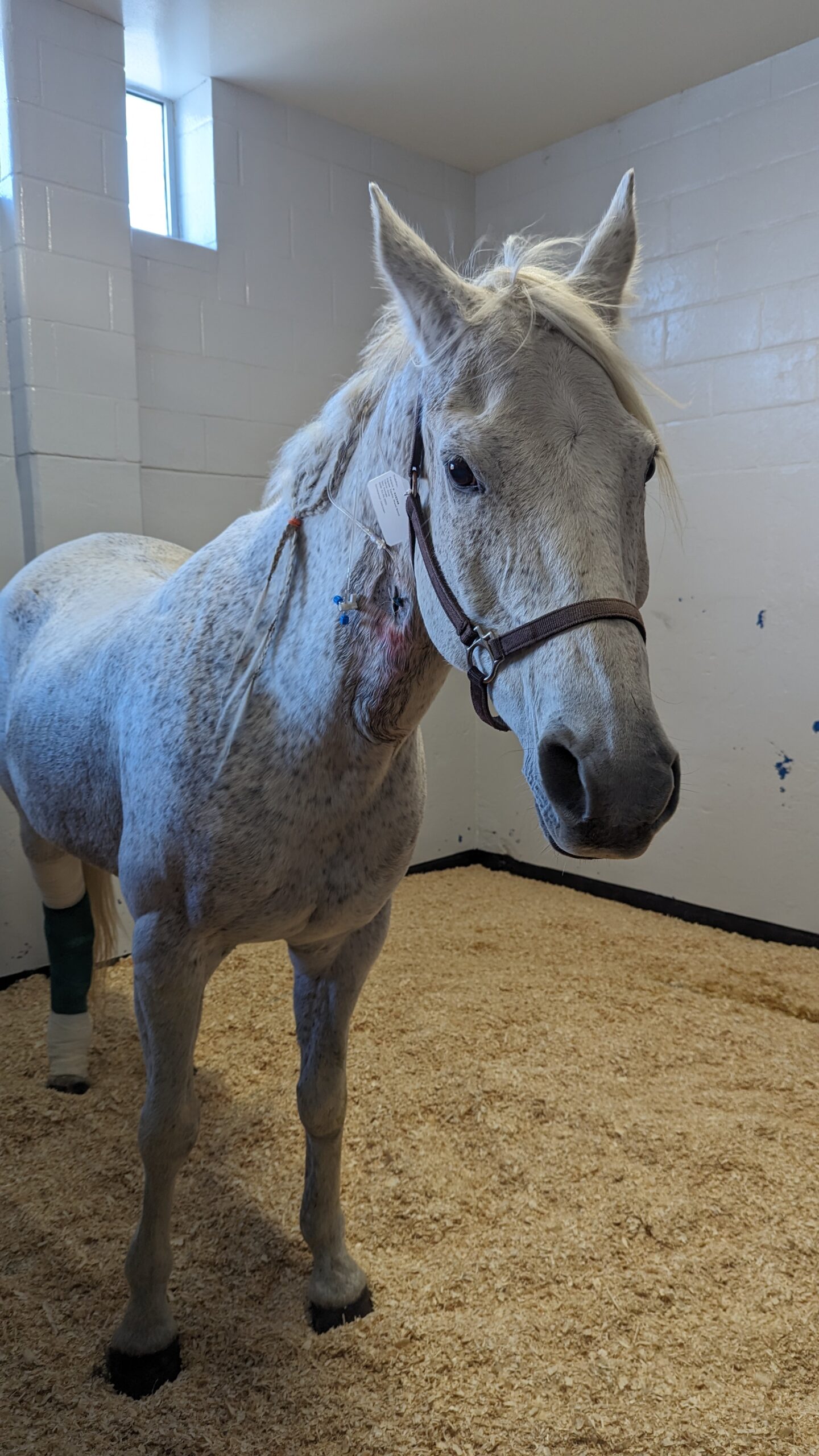
This horse had to be admitted to the Equine Veterinary Hospital because the joint was punctured and at high risk for infection.
Why Equine First Aid Matters
Because good horsemanship includes being prepared for the unpredictable and the unthinkable.
When a horse gets hurt, shows signs of colic, or seems “not quite right,” the first few minutes matter. Most horse people deeply love their horses. But love alone does not tell you what to do when something goes wrong.
Some emergencies are obvious. Others begin with subtle changes that are easy to miss if you do not know what to look for. First aid training teaches you what is normal, what is not, when to call the vet, and what you can safely do while you wait.
This is not about replacing your veterinarian. It is about becoming a more informed, responsible, and capable first responder for the horses in your care. Safety is not separate from relationship-based horsemanship. It is part of the relationship.
Hands-On, Not Lecture-Only
Every course includes hands-on practice, so participants connect the theory to real barn situations. They practice, observe, and discuss in a warm, respectful, horse-centered setting.
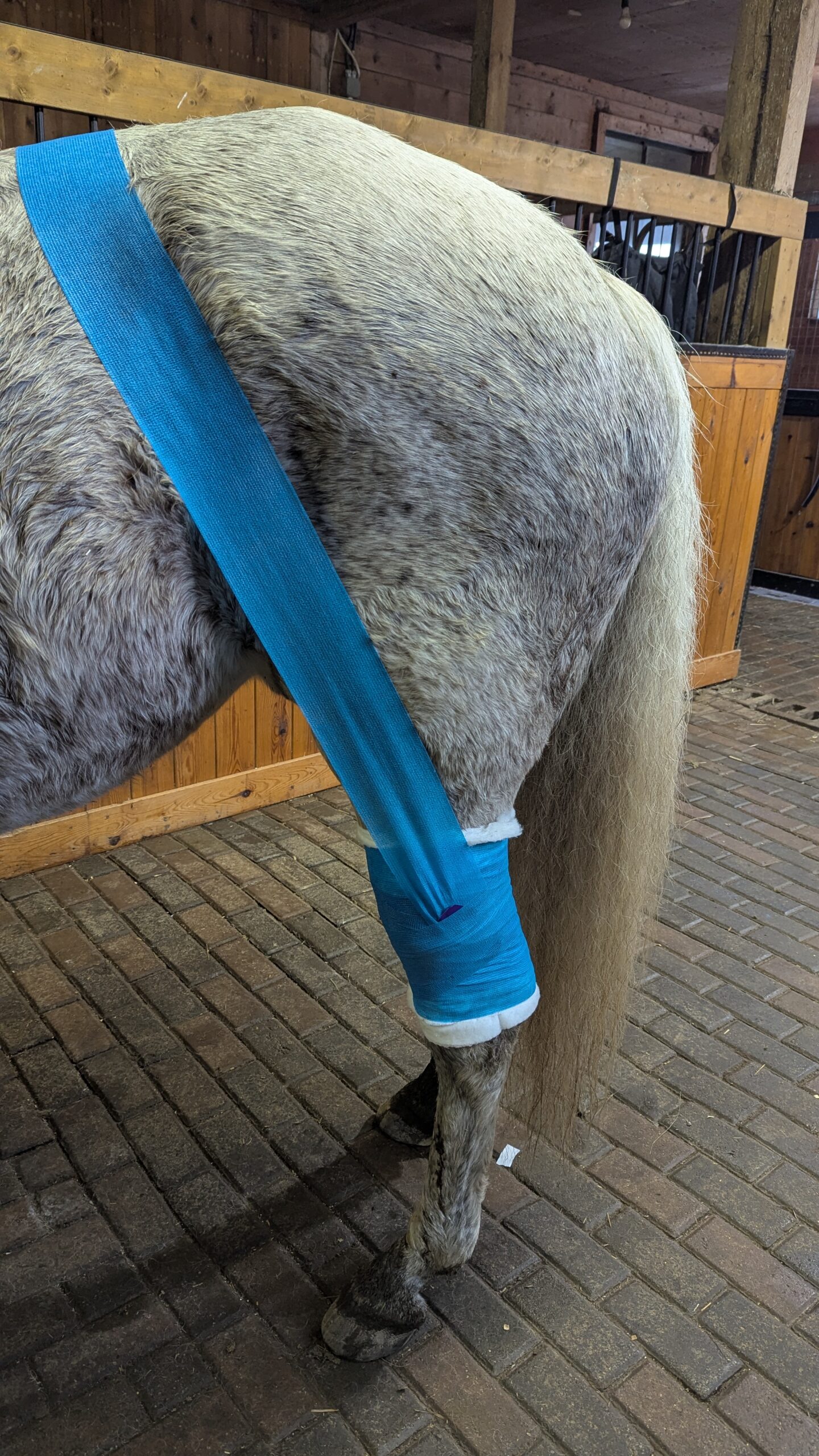
The goal is simple: people who are safer, calmer, better prepared, and more useful to the horse.
Choose Your Course
Not sure where to start? Most groups begin with Equine Health and Emergency First Aid.
RECOMMENDED STARTING POINT: Equine Health and Emergency First Aid (one day)
The most complete foundation for horse owners, riders, barn staff, and caregivers. Ideal if you are unsure how to recognize a serious health problem.
You will learn to:
- Assess a horse systematically and take vital signs
- Recognize pain, distress, colic, shock, wounds, and illness
- Respond appropriately while waiting for the vet, and gather the information your vet needs
Best for: horse owners, part-boarders and leasers, trail riders, barn staff, riding students, coaches, clubs and associations.
Advanced Equine Health and Emergency First Aid (one day)
For people responsible for horses and barn safety who want deeper knowledge and more confidence in serious situations.
You will learn to:
- Analyze serious scenarios and prioritize care when time matters
- Respond to wounds, lameness, colic, heat stress, and shock
- Communicate clearly with owners, staff and veterinarians, and strengthen your barn’s emergency plan
Best for: barn owners and managers, coaches and trainers, rescue facilities, equine professionals and experienced horse owners.
Two-day option: book both courses back-to-back for a deeper educational weekend. Ideal for barns training boarders and staff, clubs, and rescue facilities.
First Aid Fundamentals (half day)
A shorter, more affordable option when a full day does not fit your schedule or budget. It gives you a clear starting point in equine first aid: basic warning signs, normal versus abnormal, when to seek help, and how to respond calmly. Best for new horse owners, recreational riders, barn volunteers, riding school participants, and parents of young riders.
I Can Help (half day, for kids)
A fun, age-appropriate course that helps children become safer, more observant, and more helpful around horses, including knowing when to get an adult. Best for riding schools, pony clubs, youth groups, summer programs, and families with horse-loving children.
Why Learn With Geneviève Benoit
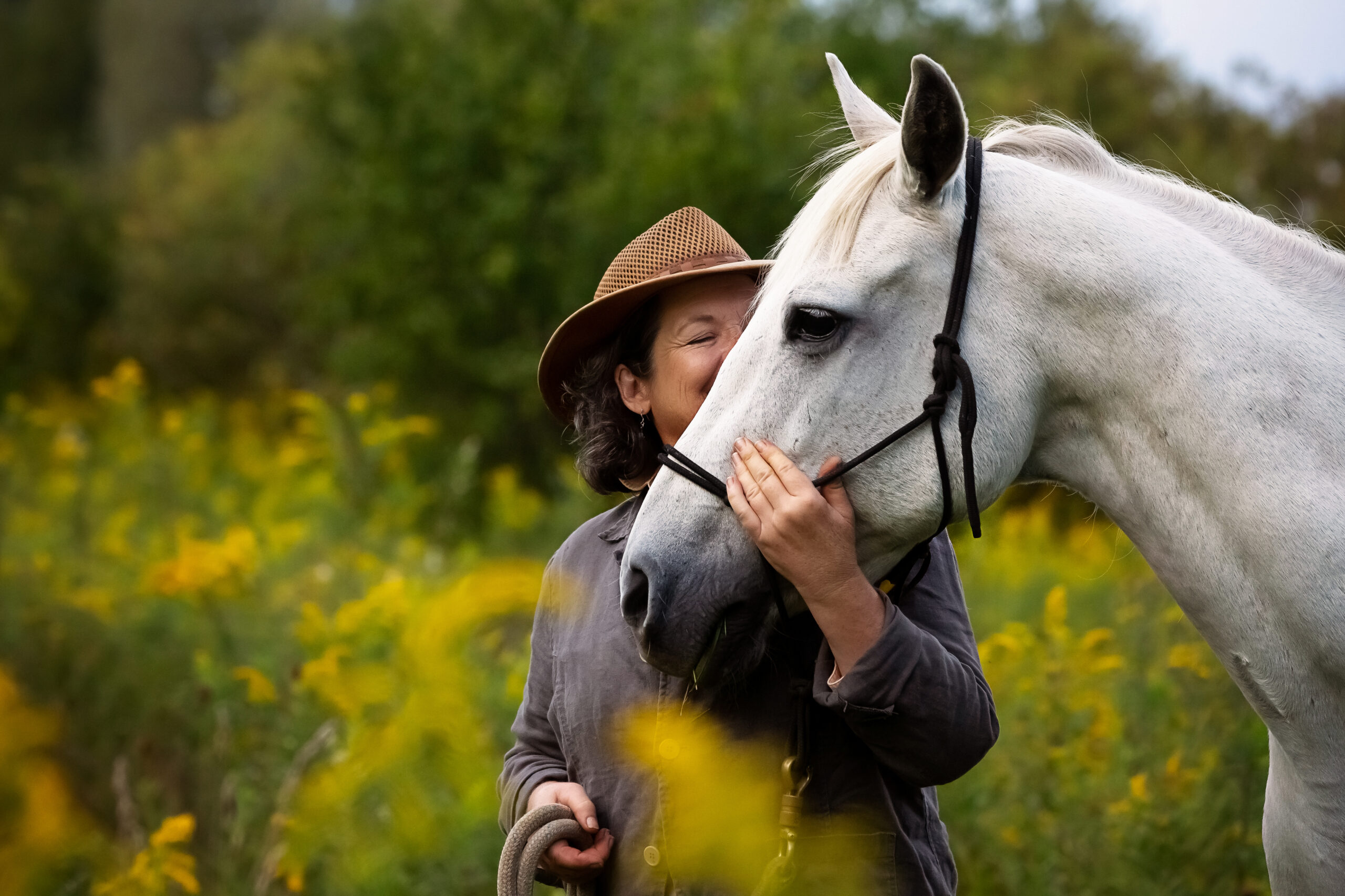
Geneviève brings over 50 years in the horse industry as a rider, competitor, breeder, coach, trainer, and horse owner. She is a Certified Equestrian Canada Coach, has been teaching since 2006, and is an Equi-Health Canada Licensed Instructor.
Good horsemanship is not only about what we teach the horse. It is also about how well we observe, listen, prepare, and take responsibility for the horse’s well-being.
No drama. No panic. No pretending. Just useful knowledge, calm preparation, and better care for the horses we love.
Host a Course at Your Barn
Courses are offered at hosting facilities only. Hosting brings practical education to your barn community, and it shows your clients, students, members, or boarders that horse welfare and safety matter.
You may be a good host if you are a barn owner or manager, coach or trainer, club or association organizer, rescue facility, or a group of horse friends with access to a suitable facility.
What the host provides
- A classroom or learning space, climate-controlled when possible, with power for a laptop and monitor (Wi-Fi preferred)
- A safe, sheltered area for hands-on practice, such as a barn aisle, indoor arena, or covered area
- Suitable demonstration horses (participants usually do not bring their own)
- Washrooms, parking, and coordination of participant logistics
Exact requirements are discussed during a discovery call and depend on the course, group size, and season.
Group size: usually 5 to 25 participants, depending on the facility and format. Smaller private groups may be possible by arrangement.
Where: the Greater Toronto Area and surrounding regions, other Canadian locations, and Quebec (in French or English). Travel fees may apply.
Pricing: contact Geneviève for current pricing. Special rates may be available for families, rescue facilities, and selected group bookings, and hosts may receive one or two complimentary participant spots.
How to Book
- Request a discovery call by email or phone.
- Talk through your group and facility: audience, preferred course, number of participants, demo horses, and goals.
- Choose your dates, taking travel into account.
- Confirm with a non-refundable deposit to secure your date.
- Finalize the details: forms and liability waivers (sent in advance), lunch, horses, and setup.
Common Questions
Do I need experience to attend? No. First Aid Fundamentals is entry-level, while the one-day courses go deeper.
Can a small barn host? Possibly, yes, if you have a suitable learning space, a safe area for hands-on practice, appropriate demo horses, and enough participants.
Does first aid replace my veterinarian? No. It helps you recognize problems, respond appropriately, support the horse safely, and communicate more clearly with your vet.
Ready to Help Your Barn Feel Calmer and Better Prepared?
Let’s talk about the right course for your group.
- Taught by an Equi-Health Canada Licensed Instructor and Certified Equestrian Canada Coach
- Hands-on practice in every course
- Offered in English or French, across Ontario, Quebec, and beyond